
Best Practices for Employee Data Management & Statutory Record Keeping with LCS
Introduction
Managing employee information has become a critical responsibility for every HR and compliance team. With stricter labour regulations, audits, and data protection standards, companies must adopt strong Employee Data Management systems to ensure accuracy, transparency, and statutory adherence. Trusted partners like LCS help businesses maintain fully compliant and secure documentation practices.
Why Employee Data Management Matters?
Efficient Employee Data Management ensures seamless onboarding, payroll accuracy, PF/ESI compliance, and adherence to Indian labour laws. Missing or inaccurate records can lead to penalties and compliance failures.
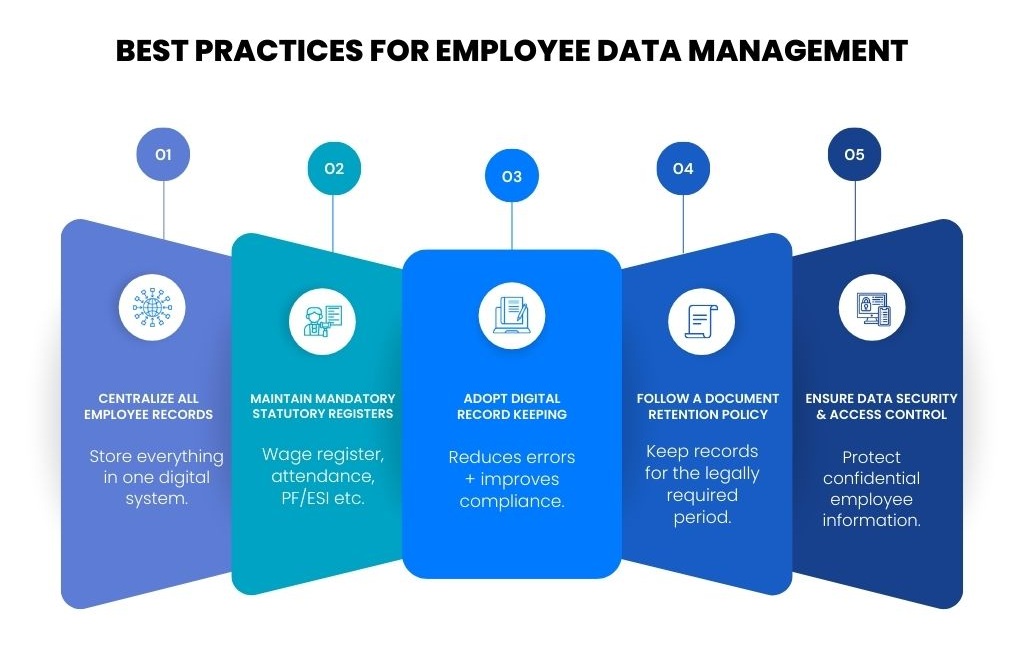
Best Practices for Employee Data Management
1. Centralize All Employee Records
Store documents in a unified digital system to improve accessibility and reduce duplication. This ensures better Employee Data Management and quick retrieval during audits.
2. Maintain Mandatory Statutory Registers
Every organization must maintain registers related to attendance, wages, PF/ESI contributions, leave, and employment terms as per labour laws.
3. Adopt Digital Record Keeping
Digitalization improves accuracy, reduces physical storage issues, and enhances Employee Data Management efficiency.
4. Follow a Clear Document Retention Policy
Retention periods differ for PF, ESI, wage registers, and employment contracts. Companies must adhere to these timelines to remain compliant.
5. Ensure Data Security & Access Control
Restrict access to confidential employee files and use secure storage systems to prevent unauthorized data exposure.
Strong Employee Data Management and statutory record keeping help companies reduce risk, improve compliance performance, and ensure smooth HR operations. With expertise from LCS, businesses can achieve a streamlined, error-free, and audit-ready documentation ecosystem.